Showing posts with label japanese movie. Show all posts

Wednesday, July 1, 2020

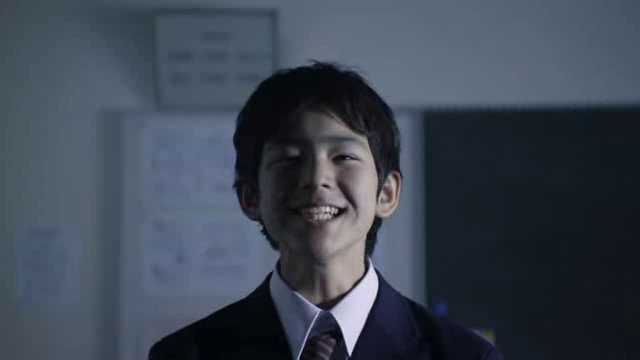
Colorless [Sarugakucho de aimasho] (2019, Takashi Koyama)

 I am thankful to the administrators of the Udine Far East Film Festival for making a big portion of their offerings available for online viewing. This might be my only chance to see this film, which isn't even registered on IMDb. Thus I fear  that this is going to be one of those films that only circulate un festivals and never come out to be a bigger public. 
It is not easy to gather information about this film. It was presented at the 2019 Tokyo Filmfestival. 
Haru Nemuri wrote a clever script. There are three chapters: 1. June - July 2019; 2. March 2018 - July 2019; 3. After August 2019. They are respectively 40, 30, and 50 minutes long - again a hint of careful composition.
There are motives throughout the films that highlight the character Yuka Tanaka (played by Ruka Ishikawa) ; when can she tolerate cigarettes? Which phrases does she copy from whom (walking of zombies, innards in Korean BBQs). Who copies whom? Who is authentic? How long will Yuka go to achieve her dream?
In the first scene Shuji Oyamada (played by Daichi Kaneko) learns that millenials lack focus and passion.
Director Takashi Koyama explores the romance between Oyamada and Yuka. Oyamada is an aspiring photographer, Yuka wants to become a model or even better an actor. The film also delves into the darker and self-destructive sides of the couple. Each chapter end with moving out.
In the introduction statement the director expressed his hopes, that we like this film. I do. Colorless gave me a different view of the hopes and aspirations of young people in Japan.
 9/10


Sunday, April 1, 2018

海街diary ([Umimachi Diary] Our Little Sister, 2015, Hirokazu Kore-eda]

Thanks to mr. Koreeda we know Japanese everyday routines better. Our Little Sister has not much of a plot, but enjoys describing the rituals in a middleclass Japanese households. The film is about three sisters who live by themselves. Their father left them many years ago for another woman. Now he is dead and they find out that they have a little sister. They ask her, if she wants to live with them. Slowly she becomes a part of their household. We follow their lives and routines in a constant flow. Charming.
7/10


Wednesday, January 3, 2018

風に濡れた女 ({Wet Woman in the Wind], 2016, Akihito Shiota)

Akihito Shiota is a new name for me. There are so many directors that I don't know, so there seems to be a lot to discover. Shiota is, however, not a collectible, at least not with this flick.
 It starts somewhat promising: Kosuke, a once successful writer of plays has run out of ideas. He tries to find inspiration in a secluded life, somewhat in the style of Thoreau. A sex-hungry woman, Shiori,  enters his life with a splash. Kosuke refuses her, so she sets his mind at seducing him. The local inn-keeper has also an eye on her. - Later a troupe that will perform one of Kosuke's pieces arrives. The boys queue nicely until Shiori has made them happy - everything to wet the appetite of Kosuke. At the beginning Kosuke threw a piece of bread to Shiori, as if she was a dog. In the end she will ask, who was the dog.
Through other reviews I learnt that this is a homage to the Japanese "romantic porno" genre. Young directors could try new ways of telling a story, as long as they showed enough naked skin to keep viewers in the cinema hall. As I don't know this genre, it's for me more like "art house meets soft porn".
3/10


Saturday, August 12, 2017

告白 ([Confessions], 2010, Tetsuya Nakashima)

Reception of this film might suffer from misdirected expectations. This is not a film with abundant  graphic violence. Fortunately it is not like Miike's Lesson of the Evil - and I am happy for that. This is more like Solomon's Perjury by Izuru Narushima, but less long-winded. Confessions is a psychological revenge thriller.
Last day before spring break in a school somewhere in Japan. A young teacher tells her class that she won't return after the break. She also tells class her  story about her murdered daughter and that the murderers are in the classroom. Her revenge is that she has infected the school milk of the culprits with the HIV virus.
Naoki (Kaoru Fujiwara) is shattered. He isolates himself. When his moither finds out that her beloved son actually killed a human being, she attempts a murder suicide.
Shuya (Yukito Nishii) is suffering from a mother complex. His mother abandoned him to pursue her career as a scientist. When Shuya sees that one of his inventions is in the media overshadowed by a family murder, he changes career and wants to become a criminal master mind to get his mother's attention.It seems that this class has a more than usual share of wannabee Raskolnikovs, as Mizuki (Yukito Nishii), a girl from the same class has killing fantasies.
In the end we see that condemning the boys to a life in hell is the most efficient revenge.
This is a loveless world, no compassion, only lust and greed. There is a lot of competition to become the best, even if the 15 minutes of fame include blowing up oneself and the whole school.
Those schoolkids still have to learn the value of life (命). This kanji is used in the film. The dictionary informs me that this character also means fate or destiny.
The plot is captivating as we continually get more information on the characters and their actions. In the middle, however, I was almost losing interest, as I thought that everything already had been told. However, it still continued to surprise me.
There are some annoying things in this film: there is an almost continuous soundtrack going on. Sometimes known pieces, sometimes soft supermarket music. This really got on my nerves. For me this would have probably worked better with different and less background noise. Nakashima also overuses certain gimmicks, like slow motion. It does not always serve a purpose. Or reflections in convex mirrors. - On the other hand the young actors are amazing, displaying a wide range of emotions.
6/10


Saturday, July 15, 2017

浮雲 Ukigumo (Floating Clouds [1955, Mikio Naruse])

I had seen this before and wanted to see it again in the context of other Naruse films.
In a way it is not easy to understand why this is supposed to be one of the best post-war Japanese films. I have been told that Naruse has done better than this. Then - maybe he has and this hit the nerve of Japanese society best.
It is about disrooted people Japanese after the lost war. Yukiko is repatriated from Vietnam where she worked as secretary for the forest department. She had an affair with Kengo, who promised her that he would leave his wife and that they would live together. Of course Kengo has not the intention to that. Yukiko is struggling to make a living. Kengo is still fascinated by her, but he is not all constant in his emotions. Actually he has another affair even while flirting with Yukiko. Hopefully a modern woman would tell a Kengo-type to go his way. This is melodrama, so when Yukiko dies, he realizes what he has lost.
I found this very interesting, even poetic. Naruse's narration is not always easy to follow. I was sometimes not sure if I was in a flash-back, present time or the next shot. There is a beautiful scene where a kiss from a flashback is continued in the present. (I wish I could append it here.) However, I was not always sure about the level of the narration I actually was on.
7/10


Saturday, October 24, 2015

天空の城ラピュタ (1986, Laputa: Castle in the Sky, Hayao Miyazaki)

Another film by the grand old man of Japanese anime. However, I see that my inner Japanese is not really fully developed. Although I am basically curious, I am now a bit tired of this genre.
Another nice film about saving the world, restoring a once golden age, Paradise Lost, Refound and Lost Again.
I don't want to make fun of it, but I just had too much Miyazaki - or maybe the program committee of Film4 made a poor selection and chose too many films with similar plots. What again was the difference between this and Nausica?
8/10 -- and now I need a break from Miyazaki
Sheeta and Pazu, the orphaned heroes of this film

The grandmother of the pirates - who will trust this woman?


Laputa - uprooted and floatingaway


Thursday, October 8, 2015

風の谷のナウシカ (1984, Nausicaä of the Valley of the Wind, Hayao Miyazaki)

As normal European viewer it is at face-value not so easy to understand the hype about animation films in Japan. Viewers like me need to overcome their prejudices against this genre - the shadow of Disney is too powerful in this part of the world.
Film4 had a series with Miyazaki animations - and I realized that they were famous among lovers of fantasy films. Long time ago I had a visitor from Japan, traveling with Japanese cartoons - probably I have seen more Miyazaki films than I realize. Maybe later I will recall what I have seen in the past.
Now this is a dystopian. The earth is largely uninhabitable, large insects roam around and toxic seeds pollute the jungle. Thanks to the winds that make the seeds drift away, one valley is still populated by humans. They live there in rather poor conditions. Of course there has to be a fighting and at last all ends well. Humanity can be rebuilt.
Although the animation is very attractive, the pure fantasy content didn't really appeal to me. It was attractive to see what fuels the Japanese imagination. In short: I see the qualities of this film, but still I cannot be a great fan of it.
5/10