Wednesday, July 1, 2020

Colorless [Sarugakucho de aimasho] (2019, Takashi Koyama)

 I am thankful to the administrators of the Udine Far East Film Festival for making a big portion of their offerings available for online viewing. This might be my only chance to see this film, which isn't even registered on IMDb. Thus I fear  that this is going to be one of those films that only circulate un festivals and never come out to be a bigger public. 
It is not easy to gather information about this film. It was presented at the 2019 Tokyo Filmfestival. 
Haru Nemuri wrote a clever script. There are three chapters: 1. June - July 2019; 2. March 2018 - July 2019; 3. After August 2019. They are respectively 40, 30, and 50 minutes long - again a hint of careful composition.
There are motives throughout the films that highlight the character Yuka Tanaka (played by Ruka Ishikawa) ; when can she tolerate cigarettes? Which phrases does she copy from whom (walking of zombies, innards in Korean BBQs). Who copies whom? Who is authentic? How long will Yuka go to achieve her dream?
In the first scene Shuji Oyamada (played by Daichi Kaneko) learns that millenials lack focus and passion.
Director Takashi Koyama explores the romance between Oyamada and Yuka. Oyamada is an aspiring photographer, Yuka wants to become a model or even better an actor. The film also delves into the darker and self-destructive sides of the couple. Each chapter end with moving out.
In the introduction statement the director expressed his hopes, that we like this film. I do. Colorless gave me a different view of the hopes and aspirations of young people in Japan.
 9/10


Friday, June 5, 2020

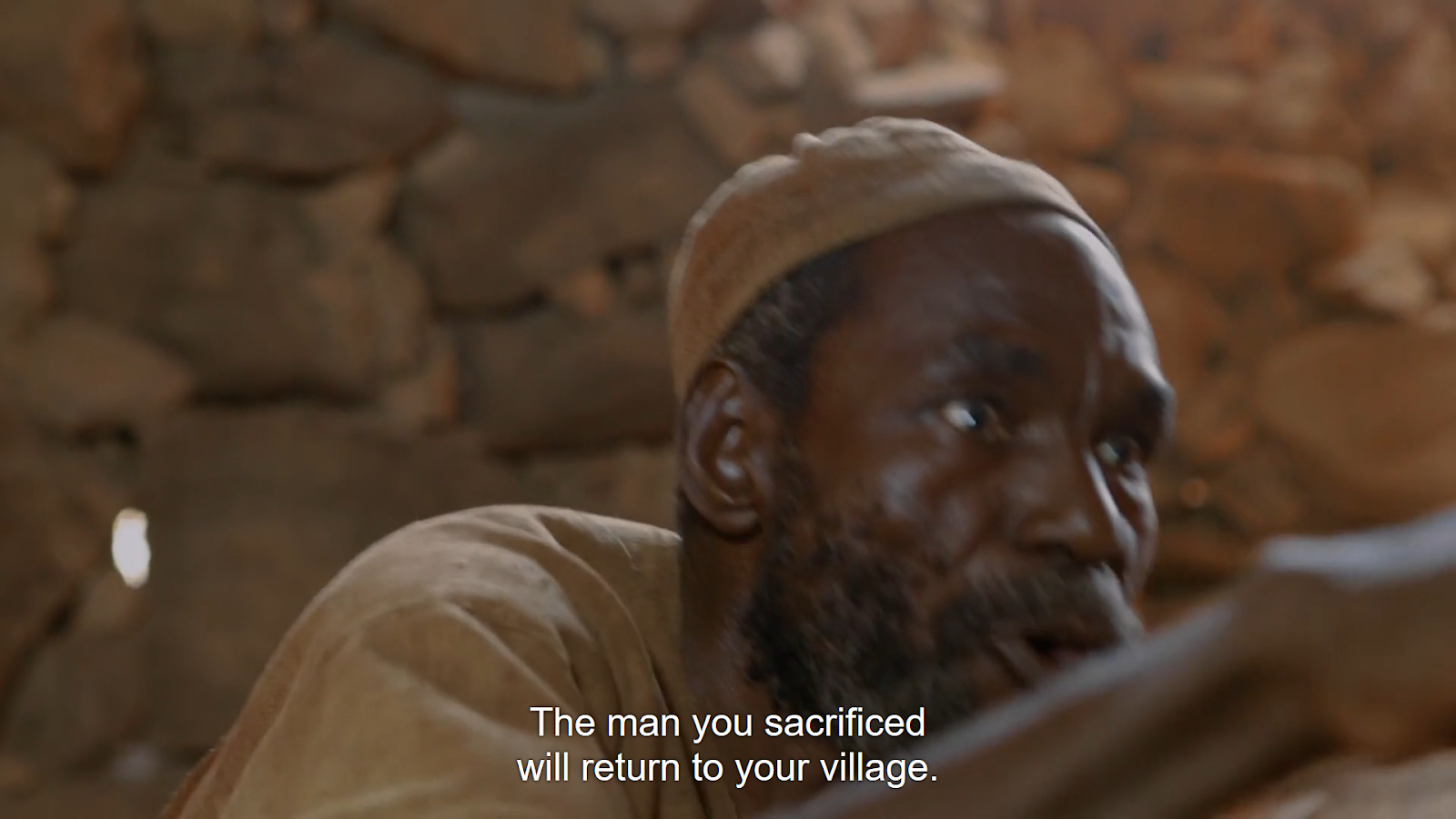
Barkomo (2019, Aboubacar Bablé Draba / Boucary Ombotimbé)

 Here is a film that IMDb doesn't know. In some time I have been interested in Films from Africa. I know there is much to find, but where? Distribution is a major issue, another availability. I am really thankful that the service Festival Scope has made several films from Africa available for online viewing. Of course, not all of these films are masterworks, but many are worth a watch. Without a record in IMDb, however, we cannot know that they exist at all. Also the two film makers are not known to IMDb.
Mali - undefined time. A hunter has been married for ten years, but they haven't had children yet. The wife suggests that he takes a second wife. When he does so and when she gives birth to a boy, the inevitable quarrel between the two wives start. The humiliated first wife goes away and comes to the realm of the King of Barkomo. In his realm nature has taken revenge for a not permitted human sacrifice. Nature may be reconciled when certain conditions are fulfilled.
The exiled wife of the hunter is to her big surprise pregnant. The king of Barkomo takes her as his second wife and it shows that her son is the one that can reconcile the nature. 
Many years later has this boy a conflict with the son of the king's first wife.
Barkomo tells the founding myth of the Dogon culture. The film shows and tells and doesn't necessarily explain. Impressive pictures are supported by a suggestive score. The editing is superb The acting is not first-class. Most actors seems to recite their lines in an unnatural manner. Still this is a fascinating look into a generally not much known culture. 
8/10


Monday, June 1, 2020

18 Hours (2017, Njue Kevin)

In October 2015 Mr Alex Madaga was hit by a car in Kenya's capital Nairobi. The paramedics tried to get him to a hospital for 18 hours. When they finally came to a hospital that would take Madaga, his condition had become so critical, that his life was lost. This is the true event on which Njue Kevin wrote the film 18  Hours.
When someone makes a film about a known incident, one reason is to accuse a bad state of affairs and to raise consciousness about a deficit. Kevin succeeds in this respect. The editing of this film creates a continuous suspense. We follow the paramedics Zack and Mark in their run against the clock and have the vain hope, that they may succeed, although we know that this is a vain hope.
The acting is also quite good, anyway much better than often seen in other African films I have seen.
Unfortunately the script is not very strong. Many lines feel like taken from a text book. Other dialogues are painfully clichéd, fx. like God's silence and forgiving. However, the actors (Nick Ndeda and Brian Ogola) manage to deliver these lines in a life-like fashion.
I am grateful that Festival Scope shows at the moment a selection of films from Africa. I am surprized to learn about films, of which existence I didn't know before. I am amazed to see how much talent there is - and talent that rarely gets a chance to tell their stories. I would like to follow the career. And I wish that Africa no longer is the unseen continent on the silver screen.
8/10


Saturday, April 11, 2020

Vores lille by (1954, Henning Ørbak)

Ligegyldig hvad nogen smider på marked hedder nu om dage "filmperle", eller endnu værre "perle fra den danske filmskat". Denne tynde omgang nøjes med at være bare en filmperle.
Den lille by er strengt taget bare en klynge huse med nogle ualmindelig frustrerede beboer. Bygden er knyttet til den øvrige verden med et lille tog. En solrig eftermiddag bliver vagabonden Laust ansat som togbetjent. Da ha bosætter sig i samfundet, vækker han det erotiske begær i nogle kvinder. Han er mest interesseret i ung kød. Da han beruset forveksler sin elskede med lærerens kone, kommer der lidt mere gang i handlingen. (Ja, det går nok heller ikke i vores metoo-tid, bare at tager en kvinde i mørke.)
Mændene er nok også erotisk underforsynet. En varm sommerdag er holdet på jernbanen nødt at stoppe toget for at belure piger, som tager et bad. Handlingen er usammenhængende, mere som enkelte situationer og den ender meget brat med et happy ending.
2/10

Friday, April 3, 2020

Binti (2029, Frederike Migom)

Another view thanks to the generous decision of the Film Festival of Aubagne to make entries of the main competition available online.
Usually I don't watch many films for young viewers. This was a charming exception. Binti makes a serious problem understandable and relevant for young viewers. Binti is an illegal alien in Belgium. In other words: she lives, but she doesn't exist. She was born in Congo, but her father brought her to Belgium right after her birth. So they run away, as soon as they see a police agent. Binti meets Elias, a boy with a divorced mother. Wouldn't it be a perfect  match, if Binti's father and Elias' mother became a couple? Things get complicated, when a jealous neighbour denounces them to the police.
8/10